design parts for mold die casting
Designing parts for mold die casting requires a thorough understanding of the process and its inherent limitations and advantages. The goal is to create a component that not only meets its functional requirements but can also be manufactured efficiently and cost-effectively through high-pressure injection of molten metal into a steel die. Early consideration of design principles specifically tailored for mold die casting can significantly reduce production costs, improve part quality, and shorten lead times. This involves careful attention to wall thickness, draft angles, radii, and features that facilitate the flow of molten metal and the easy ejection of the finished part.
One of the most critical aspects when designing parts for mold die casting is maintaining uniform wall thickness. Variations in wall thickness can lead to inconsistencies in cooling rates, causing internal stresses, warping, and sink marks on the part surface. While some variation might be unavoidable for functional reasons, designers should strive to transition gradually between different thicknesses to ensure smooth metal flow and prevent premature solidification. Incorporating ribs or gussets can provide structural integrity in thinner sections without excessively increasing overall mass, allowing for lighter yet strong components.
Another fundamental principle is the inclusion of proper draft angles. A draft angle is a slight taper applied to vertical walls of the part, allowing it to be easily ejected from the die cavity without sticking or damaging the surface. Typically, a minimum draft of 1 to 2 degrees is recommended, though larger angles are always beneficial for smoother ejection. Without adequate draft, the part can get stuck in the mold, leading to longer cycle times, increased wear on the die, and potential part deformation. All surfaces parallel to the opening and closing direction of the die must incorporate a draft.
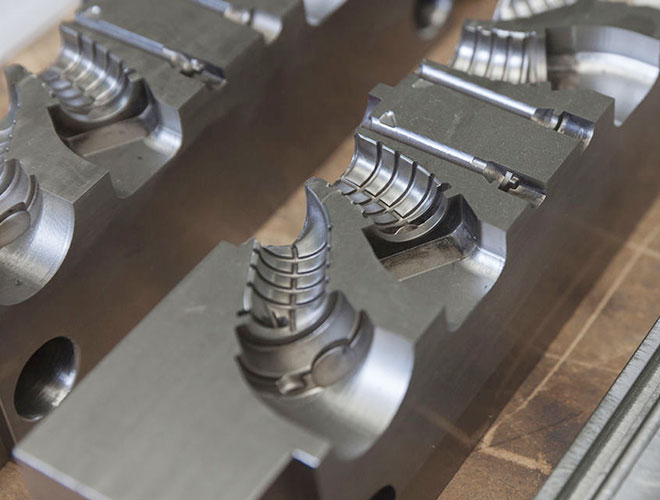
How to design parts for mold die casting?
Radii, or generous curves, at corners and transitions are also vital for successful mold die casting. Sharp corners concentrate stress during solidification and can lead to cracking in the finished part. They also make the die more difficult to machine and prone to premature wear. Incorporating generous radii (typically 0.5 to 1.5 times the wall thickness) improves metal flow, reduces turbulence, minimizes stress concentrations, and enhances the overall strength and aesthetic appeal of the cast part. Collaboration with a skilled die casting mold factory can provide invaluable insights into optimal radii for specific applications and alloys.
Beyond the core design elements, designers must also consider features such as cores, undercuts, and inserts. Cores are used to create holes or openings in the part, while undercuts are features that prevent the part from being directly ejected from the die without additional mechanisms. While undercuts can be accommodated through sliding cores or intricate die designs, they add complexity and cost to the mold. Minimizing or eliminating undercuts is generally preferred. Inserts, often made of a different material, can be cast into the part to add strength, conductivity, or other specific functionalities, provided they are properly anchored within the mold.
Ultimately, effective design for mold die casting is a collaborative effort between the product designer and the casting engineer. Early involvement of die casting experts can help identify potential manufacturing issues before the design is finalized, saving significant time and resources. By adhering to principles of uniform wall thickness, adequate draft, generous radii, and thoughtful consideration of complex features, designers can create parts that are not only functionally robust but also optimized for the efficient and high-quality production inherent in the mold die casting process.